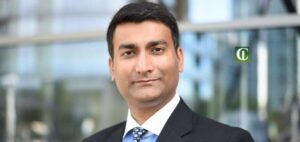
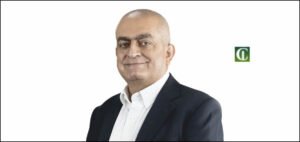
In the brutal world of cybersecurity where a single vulnerable area can balloon into millions of losses and wasted reputations perpetually, Mario Foster plays an essential part. Group Chief Information Officer to the most high-profile Arab world conglomerate with diversified interests, Al Ghurair Group, Foster has eschewed the omnipresent IT leadership to become a legend in his own right. He’s established himself as a digital resilience vision architect in a few countries which are undergoing historic technological change.
From Curiosity to Crisis Management
Foster’s exposure to cybersecurity was not passion or a eureka moment but persistent curiosity about systems and just what system failure is. That curiosity was focused at RSA Security in Boston. There, among cryptography researchers and incident responders, pretty much redefined what cybersecurity is.
“I came to understand security is not about policy and tools; it’s keeping trust and letting the business continue to function, even when inevitably things do go wrong,” Foster remembers the early days at RSA. This was his credo motto, though, because he went on to manage more than IT operations and the Security Operations Center at Riyad Bank, where “mission-critical” was a brutal fact.
In business, he learned, intellectual discipline and detached solution for nothing. The culture required hard controls, written procedures, fast decision-making, and people who would remain sane in the face of the most horrific challenges. It taught him the skill to summarize intricate risk situations into language that anybody could understand. It would be one of the best leadership skills he would ever possess.
“Along with those lessons, when they were tested, they stood the test: keep it real, make it measurable, teach the ‘why’, and establish teams that can deliver in the pressure zones,” he continues to establish standards proven by time through his unorthodox career.
The Three-Dimensional Vision
Faced squarely with the dilemma of what it means to describe cyber visionary leadership, Foster avoids ideals of a higher order for one that is utilitarian and attainable. His is a “now, next, and later” one. It’s one that balances immediacy operating needs and long-term strategic positioning.
The “now” is on fundamentals most organizations someway still manage to bungle with panache. They are rigid identity controls, autocratic patch discipline, strict-access rule, equitable backup discipline, and deeply-tested restorals.
“Next” is moving towards zero-trust architectures, smart automations of security housekeeping functions that long-tail, and threat intelligence that enables that mirrors realistically to real-world attack vectors and not scholarly construct of threats.
The “later” portion deals with horizon transformational change: quantum-immune cryptography, regulatory frameworks of AI models, and the ever-broadening emerging importance of information technology and operational technology systems convergence.
“A vision leader doesn’t pursue hot tools,” says Foster. “They invest in a manner where each step logically builds upon the last one, make safety easy to do but hard to circumvent, and build high guardrails around data and AI so innovation occurs safely, not chaotically.”
Leading Through Influence, Not Authority
Foster’s leadership style is his modern interpretation of how big organizations work. Having established his own as “principle led, outcome-driven, and people-first,” he has what he calls a “real open-door policy” but takes pains to keep away from meeting-swollen zombies that stifle agility.
His passion for “short, straight one-on-one chats where we get things done and go” generates the energy required and wipes away obstacles in no time. He excelled at observing Al Ghurair Group CEO Iyad Malas with the same efficiency and respect for other people’s time.
Foster’s leadership in managing Al Ghurair Group’s multinational corporations, a federated system of balancing the top-down management and centralized norms with local operational autonomy has commenced. There are minimums of security and top-level norms to ensure consistency and maintain risk, but business units have the freedom to institute their own solutions that best fit their own operating cultures.
“My role is to establish the north star; risk appetite, architectural principles, and skeleton policies; and then let teams deliver,” he goes on. This is seen in open roadmaps that are quantifiable, accountability frameworks that trust and verify, and coach over-command that is mentor- and peer-to-peer learning focused.
Innovation Grounded in Reality
Foster’s method of cybersecurity innovation shows the adaptability of theory of ideas into real defense. His implementation plan is three-pillared which has increased organizational resilience largely.
The first pillar is the deployment of zero-trust operations at identity and device posture, conditional access protection and least-privilege administrator roles, and micro-segmentation for completely mission-critical infrastructure. The approach again diminishes the blast radius capability of security compromise.
Threat-based defense is the second one and utilizes published attack methods with such frameworks as MITRE ATT&CK. Unlike speculative attack defense, it is concerned with blocking the attack channels actual attackers really utilize in real attacks.
The third pillar is based on operational coverage to an reputable third-party Security Operations Center with 24×7×365 monitoring and response. Through the partnership model, Foster’s group can maintain governance and strategy leadership without the cost and effort of having to develop it in-house.
Veterans in operational technology and security control will supervise industrial operations at the Al Ghurair Group. They are the type who maintain comprehensive asset lists, network segmentation, application allow-listing, and strict change control procedures.
Segmentation, application allow-listing, and change control procedures. They prioritize reliability and safety over typical confidentiality considerations in industrial settings.
Navigating Regional Complexity
Working in the Arab world is accompanied by unprecedented challenges. However, Foster successfully converted them into opportunities. Rate of implementation needed-vision-driven digital transformation strategies driven by shifting regulatory climate of the region require a strategy that is well-balanced on the basis of regulation, culture, and infrastructure.
Foster is ringing the alarm on the extent to which trust in the area is highly personal and challenging security executives to spend a great amount of time with business customers in cybersecurity alignment as a driver, not an inhibitor. That includes discussing security capabilities in terms of tangible business value-earlier deal closure with neat data residency solutions, reputation integrity, and lower operating downtime.
They are supported by global standards such as ISO 27001 and NIST models. The latter are further localized to facilitate local data residency and sovereignty regulations. Cloud deployment regions, sovereign clouds, and de facto data location regulation facilitate compliance-enabling rapid innovation.
It’s increasing but still under-leveraged talent base requires proactive development effort. Besides in-house upskilling exercises, university partnerships, and formal graduate mentoring to build long-term cybersecurity capability within the business, Foster’s plan also includes.
Building Security Culture Without Fear
One of Foster’s biggest achievements has been in establishing security culture within the firm without creating fear and resistance so typically encountered in security schemes. His approach is to merge secure practice into the pleasant, easy option instead of coercing compliance by strict mandates.
Where possible, in terms of function size in an organization, Foster has security champion networks running across functions such as finance, operations, human resources, and engineering. Champions offer tailored recommendations that align security needs with work processes, easier to implement and maintain.
Technology decisions are utilized to place user experience on an equal footing with security value: frictionless multi-factor authentication, passwordless Authentication Replacement, and thoughtfully designed default settings in shared tools. Where friction is not possible to eliminate, Foster feels the business case needs to be clearly established and process designed as frictionless as practicable.
Fault learning rather than fault finding is the organizational response to security breaches. Micro-learning modules enable the possibility of early fault detection by way of early fault reporting, simulated phishing attack with coaching facility, and open report facility. Reward replaces punishment for early fault reporters. It encourages a behavior leading to improved security posture in a positive way.
Crisis as Teacher
Foster’s own experience in response to incidents has been shaped by hard cases that stretched technological possibilities and leadership determination to their limits. Censoring only to indicate how great a level of confidentiality was involved, he cites one of the more challenging examples as a third-party software flaw that elicited vulnerable disclosure in a compromised system.
The event was used to highlight the reality that even the most robust organizations from the inside are open to attacks by their suppliers. The resolution involved prompt system containment, credential resetting, compensating control installation, and open reporting to management for impact and recovery status.
The incident ignited third-party risk management improvements. It heightened the bill of software material requirements, terms of rapid disclosure vendors under vendor agreement, and more rigid patch timeline requirements. Identity management was also further emphasized with improved conditional access, device health validation improvement, and just-in-time privileged access controls.
Most valuable, perhaps, was the information that was cemented through practice in being ready by regularly holding tabletop exercises involving legal, communications, and operations personnel. This enables them to have official responses in real incidents.
Mentoring the Next Generation
Foster’s enthusiasm for cybersecurity capabilities does not remain limited to his company in the near term. His mentoring style is an extension of providing “context and courage.” He wants to educate early-career professionals on how security impacts business value and give them courage to speak up even if such are unpopular.
His structured program of mentee development produces breadth, not depth, cycling through mentees in identity management, cloud security, data protection, governance, and risk assessment. Along the way to process maturity, pattern recognition abilities are cultivated that prove very valuable once professionals mature to lead.
Communication skills matter the most to Foster, and the protégés ask the technical findings to be paraphrased into concise risk statements with options and cost. It is a skill for which the aim is budget approval and credibility with executives. It is one of the key skills for professional growth in cybersecurity leadership.
Hands-on technical interaction is still priceless, and Foster alludes to open-source collaborative interaction, capture-the f lag exercises, and purple teaming exercises. Intrinsic curiosity and problem-solving skills in experimental hands-on activity, he thinks, are worth infinitely more than stacks of certifying papers.
Preparing for Tomorrow’s Challenges
Foster’s own content around emerging tech trends tightropes between caution and open-cheer enthusiasm. Uses for security are of keen interest to him both defense, such as threat triage and anomaly detection, and novel threats generated by these technologies.
Al Ghurair Group is preparing for AI deployment with all necessary security controls in place, including advanced data classification tools, sensitive data monitoring, real-time vulnerability testing, and comprehensive activity logging. Promote views sustaining genuine AI capability separate from “AI-washing”; traditional rule-based proposals rebranded under the artificial intelligence promotion banner.
Identity-first security is the second of these because the network perimeter is vanishing. Passkeys and persistent authentication need to be the norm, and directory services and identity threat detection spending will be required because it would be critical infrastructure.
While quantum computing is also a long-term cryptography issue, Foster refrains from rushing to his solution instead of taking pre-rash quantum-readiness measures. His firm follows vendor roadmaps and keeps cryptographic implementations records in place with the firm prepared to flip over in an overnight transition when quantum-safe standards become available to use.
The Human Behind the Leader
Aside from his own achievement, Foster has his feet firmly on terra firma in the shape of hobbies and family. An ardent Liverpool Football Club supporter, absent only occasionally for a match, he laughs that “the league can test your heart rate”, occasionally rather more than security incidents.
His home handyman work at home also gives him a rather more alternative problem-solving situation, Foster having mentioned that the family will have him repair something that’s broken “sometimes before they admit up to who broke it.” Home “high priority emergencies” over things like shelves, remote controls, and beat-up cupboard doors for absolutely no reason at all whatsoever are in amusing contradiction to his daily duty.
Foster’s greatest anchor is his children: two college-age sons, in training to be physicians, and six-year-old Rita, who refers to him simply as her “best friend.” That’s the nickname, he asserts, that keeps things in focus on what matters most.
“It humbles me in the notion that resilience isn’t only for networks; it’s for human beings, too,” Foster says, encoding the people-first philosophy that underlies his leadership style.
And since the Arab world itself is going through its own era of hyper-digitization, leaders like Foster possess the combined technology, entrepreneurial, and human talent necessary to turn reverse expand threat landscapes. His legacy will be less the security technology he has developed and more the organizations he has assembled and with whom he is respected. He will never stop showing that life itself, and cybersecurity most of all, hinges on the character of human relationships.
Read Also : Dr. Ahmed Fathy: Pioneering Sustainable Healthcare Solutions in the MENA and Africa